Continental Mills
Manufacturers of fine woolen textiles for nearly a half-century
Located at the corner of Armat and Lena Streets in the Germantown section of Philadelphia
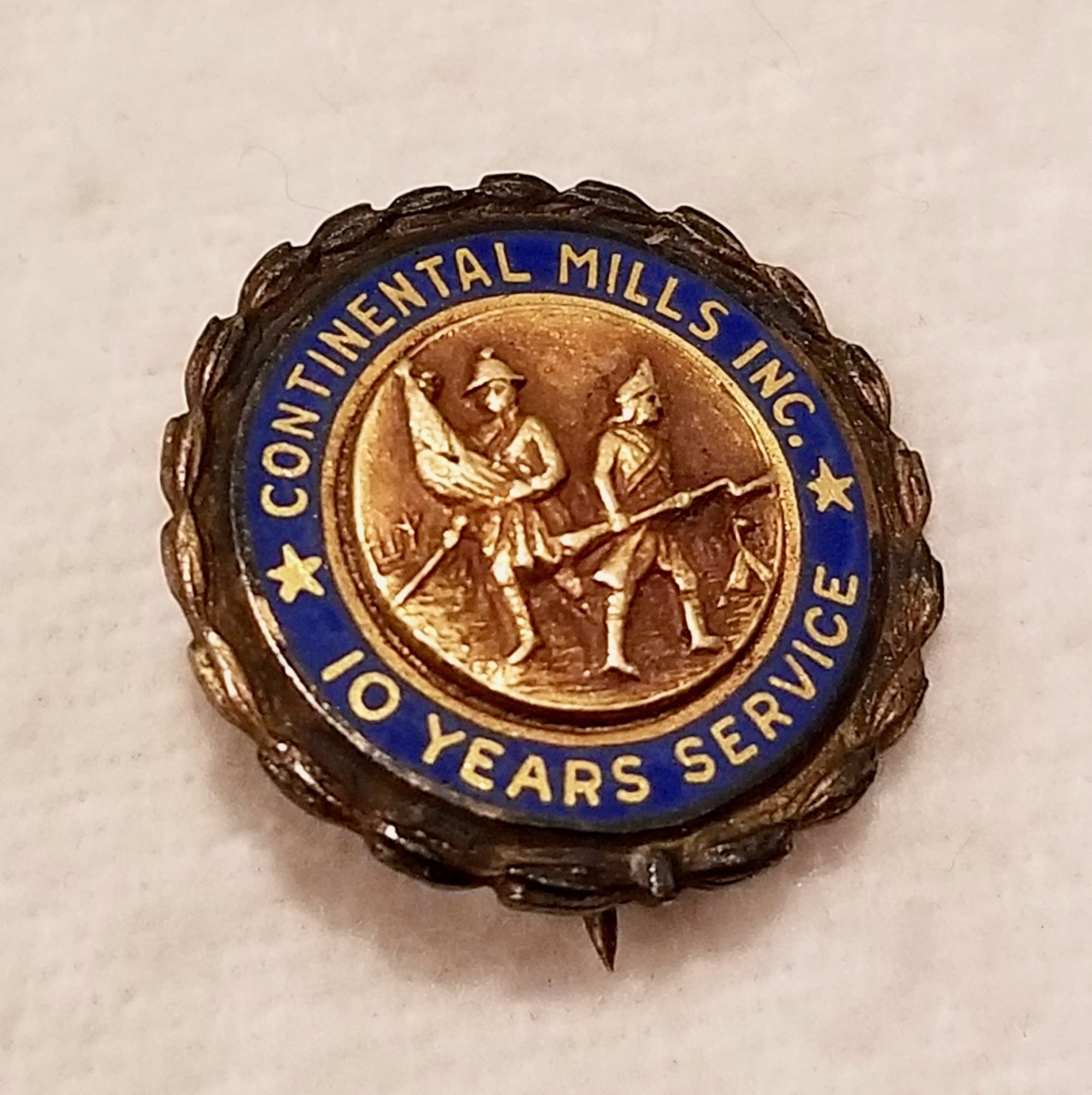
Continental Mills 10-year service pin
(photo courtesy of Jenna Phillips)
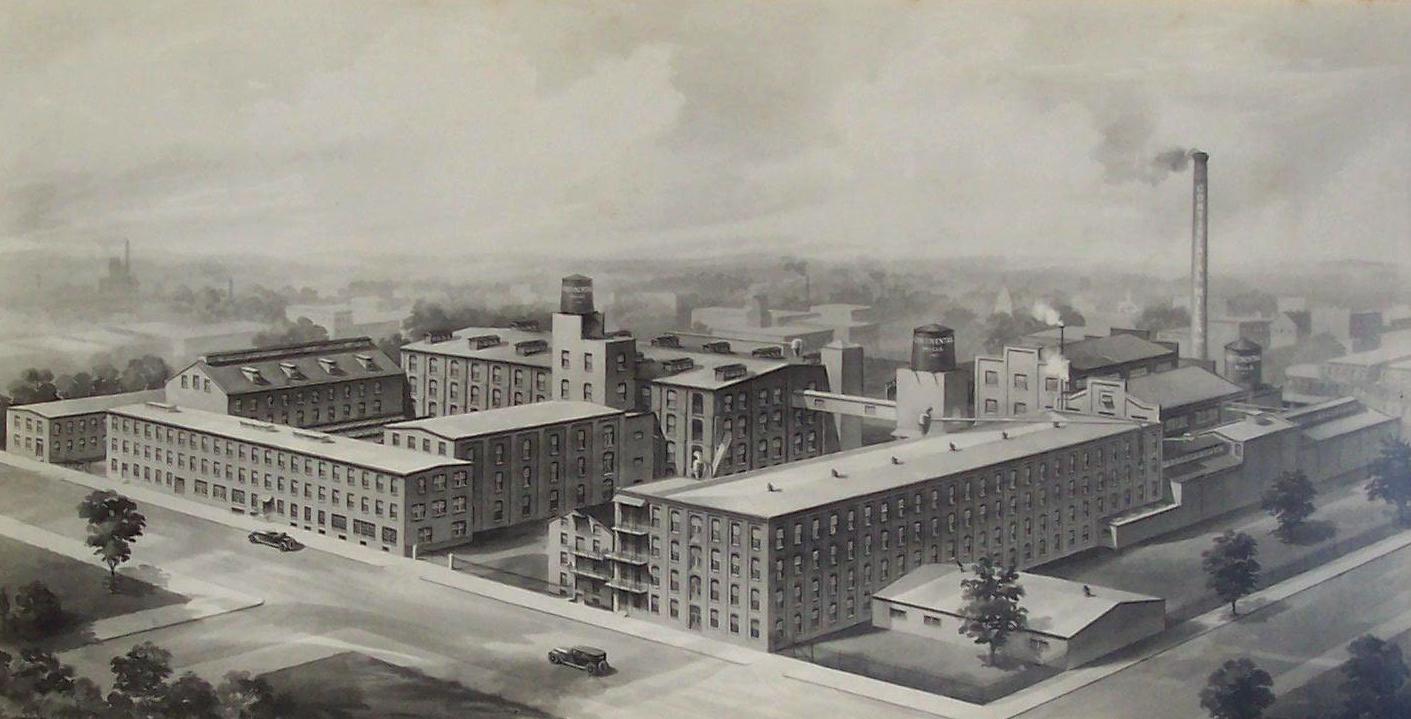
As far as I can determine,
this lithograph is the sole remaining representation of "The Mill."
Judging by the apparent age of the automobiles shown,
it seems to be from the late 1920s or early 1930s.
I am hopeful I will be able to find more information on The Mill
among my parents' remaining documents.
For now, here's what I remember my father telling me:
The original principals in this venture
were Colonel Millard Brown and my grandfather, E. Stanley Bowers, Sr.
I believe The Mill was built in the early 1920s, and for the next forty years or so
produced fine woolen fabric sold primarily to clothing manufacturers.
My father joined the business around 1930, and was responsible for sales and marketing.
Along with Colonel Brown's son, Millard, Jr., he ultimately became a co-principal.
During World War II (1941-1945) much of The Mill's production
was devoted to making material for service uniforms and military blankets.
Although my dad, at this point 34 and the father of two small children,
could have remained a civilian, he chose to enlist and was given a direct commission
as a second lieutenant in the United States Army Quartermaster Corps.
His responsibilities included the oversight and major decision-making
involving the purchase and allocation of all woolen textiles for military use.
He rose to the rank of captain and served until the end of the war.
Beginning in the early 1950s, a combination of market forces
began exerting pressures on The Mill's profitability.
Heated automobiles eventually led gentlemen to prefer lighter clothing.
Heavy overcoats, for instance, were replaced by much thinner top coats.
As synthetic fibers became popular, my father and his partner chose to remain true
to the founding vision of producing only the finest all-wool fabrics.
But the most damaging factors that led ultimately to The Mill's demise
were the irrational and utterly self-defeating demands of the unionized work force
in combination with competition from nonunion Southern textile manufacturers.
In the early 1960s the company merged with a firm in Gloversville, New York.
Shortly thereafter The Mill was razed -- a sight that broke my father's heart.
One of the redemptive aspects of this sad final chapter
is that I developed a passionate interest in management-labor issues
which, in turn, served me well as a marketing/communications consultant
for one of this country's leading labor relations experts.
Click here to return to my home page
Encouraging words are always welcome at
johndallasbowers@verizon.net
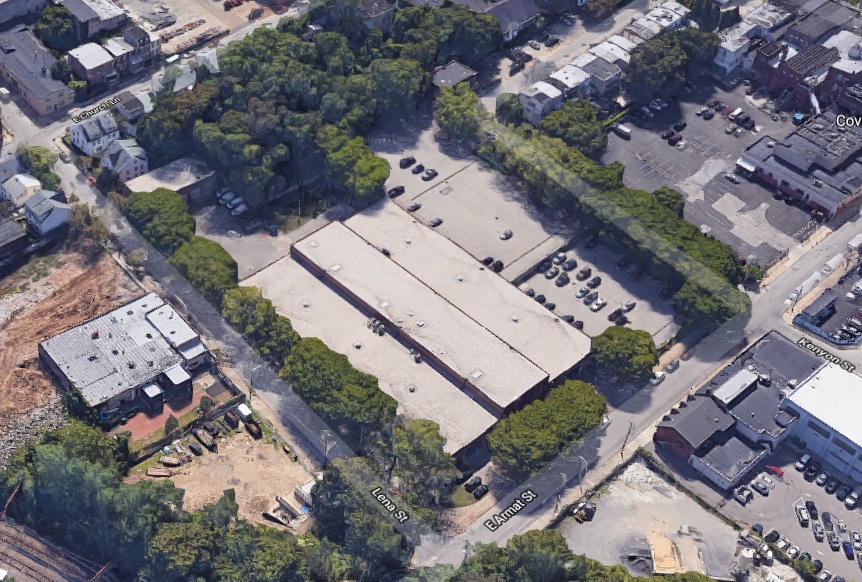
The Continental Mills site today